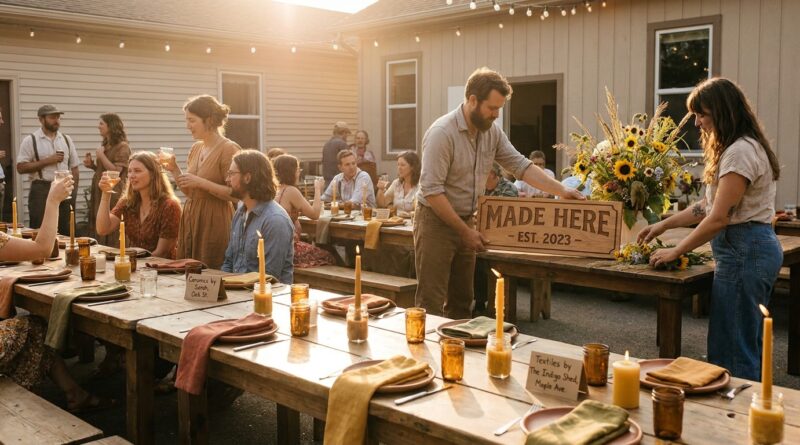
The Hyper-Local Wedding Shift: How Neighborhood Makers Are Quietly Replacing Big-Box Bridal Decor
If you have looked at wedding decor lately, you already know the problem. Everything starts to blur together. The same acrylic signs, the same imported candles, the same favor boxes, the same beige table styling copied from five giant online catalogs. It is expensive, oddly impersonal, and a little depressing when you realize half of it may end up in a dumpster the next morning. Couples want something better. They want a wedding that feels like their block, their favorite shops, their city, their people. The hard part is not wanting local. The hard part is finding reliable local wedding decor makers, figuring out who does what, and getting it all done on time without blowing the budget. The good news is this shift is already happening. Quietly, neighborhood potters, print shops, florists, woodworkers, candle studios, and textile artists are stepping into work that used to go straight to big-box wedding vendors.
⚡ In a Hurry? Key Takeaways
- Local wedding decor makers can often replace mass-produced signs, favors, tableware, candles, linens, and welcome gifts with pieces that feel more personal and memorable.
- Start with three categories first: signage, favors, and tabletop items. They are easiest to source locally and make the biggest visual impact fast.
- Ask every maker about lead times, delivery, setup, rentals, and minimum orders before you commit. Local only works well when expectations are clear.
Why couples are walking away from cookie-cutter wedding decor
Part of it is taste. People are tired of seeing the exact same wedding details over and over again.
Part of it is waste. Spending real money on decor that gets used for six hours and then thrown away feels worse than it used to.
And part of it is emotional. Weddings are one of the few moments in life where people are willing to pay for meaning, not just function. That makes every choice feel bigger. A hand-thrown ceramic ring dish from a neighborhood studio says something different than a bulk-packed trinket shipped across three countries.
That is why local wedding decor makers are becoming such a smart alternative. They do not just sell objects. They sell context. They sell story. They sell the feeling that this event could only happen here.
What “hyper-local” wedding sourcing actually looks like
This does not mean every single napkin has to be woven by moonlight in a studio down the street.
It means shifting even part of the budget toward local hands and local businesses. That can be enough to change the whole tone of a wedding.
Easy places to start
Most couples do best when they start with categories that are visible, useful, and manageable:
- Welcome signs and table signage from a neighborhood print shop or sign painter
- Candles from a local maker for favors or reception styling
- Ceramic bud vases, cups, or ring dishes from area potters
- Textile runners, napkins, or custom dye work from local sewists
- Gift boxes filled with goods from nearby food makers
- Wooden table numbers, trays, or display pieces from local woodworkers
If you are curious about how ceramics fit into this wider local economy, this piece on From Local Clay To Community Currency: How Neighborhood Ceramics Are Quietly Rebuilding Main Street is worth your time. It shows why even small orders can have a real ripple effect for neighborhood makers.
Why local wedding decor makers can be a better deal than they first appear
At first glance, mass-produced decor can seem cheaper. Sometimes it is. But not always once you count shipping, rush fees, breakage, minimums, and the fact that custom work from giant vendors often carries a premium too.
Local sourcing changes the math in a few useful ways.
You can rent, not just buy
Some local makers now offer rental collections of handmade candle holders, ceramic vessels, fabric runners, display shelves, or signage frames. That means you get the look without paying for permanent ownership.
You can bundle work across several needs
A local ceramicist might create escort card holders and favor dishes. A local printer might handle invitations, menus, and day-of signage. One relationship can solve several problems at once.
You skip some hidden costs
No mystery shipping delays. No cracked goods arriving two days before the wedding. No paying extra to overnight replacements from a warehouse across the country.
The products keep working after the wedding
This is the part people miss. Every place setting, candle, vase, or sign is a live product demo in front of your guests. If someone loves the handmade mugs at the brunch table, they may become future customers. That helps justify spending a little more because the money circulates locally instead of disappearing.
How to find local wedding decor makers without losing your mind
This is where many couples get stuck. “Shop local” sounds lovely until you realize there is no master list of trustworthy makers who can produce 75 favors by September.
So use a simple search plan.
1. Start with the most specific search term
Use phrases like “local wedding decor makers” plus your city or neighborhood. Then get more specific. Search “ceramic wedding favors Brooklyn” or “custom wedding signage Providence” or “handmade wedding candles Austin.”
2. Ask venues and photographers, not just planners
Planners are great, but venue managers and photographers often know who actually delivers on time and whose work looks good in real life. They see the results up close.
3. Check weekend markets and studio crawls
Farmers markets, craft fairs, open studios, and small retail collectives are full of wedding-ready talent. Many makers do not advertise heavily for weddings, but they are open to custom work if you ask early enough.
4. Look at restaurants, boutiques, and flower shops you already love
If a neighborhood business has beautiful ceramics, candles, linens, or woodwork in daily use, ask who made them. Great referrals often come from businesses with a strong visual identity.
5. Ask one key question right away
“Do you do small-batch wedding work, and what is your lead time?”
This saves everyone time. A wonderful maker may simply not have production capacity for your date.
How to coordinate several local makers without turning wedding planning into a second job
This is the real fear. Not cost. Complexity.
The fix is to treat it like a small project, not a scavenger hunt.
Create one simple sourcing sheet
Use a shared spreadsheet with these columns:
- Item needed
- Quantity
- Maker name
- Contact info
- Quote
- Deposit paid
- Production deadline
- Delivery or pickup plan
- Backup option
Nothing fancy. Just one place to see the moving parts.
Choose a color and material lane early
If one maker is doing natural linen runners, another is making glazed ceramics, and another is printing paper goods, they need a shared visual direction. Send each person the same inspiration sheet with your palette, mood, and venue photos.
Appoint one final decision-maker
Too many opinions can stall custom work. One person should have authority to approve proofs, glaze colors, wording, and small design choices quickly.
Build in a buffer
If the wedding is in October, aim to have local decor pieces done by early September. Handmade work is real work. Kilns misfire. Paper stock changes. Drying times are not suggestions.
What to ask local wedding decor makers before you book
You do not need to sound like a procurement officer. Just cover the basics clearly.
- What is your lead time for my quantity?
- Do you have a minimum order?
- Can I see examples of past event work?
- Do you offer delivery, installation, or pickup?
- What happens if a piece breaks or arrives damaged?
- Can this be rented, reused, or repurposed after the event?
- How many revision rounds are included for custom designs?
- What deposit is required, and when is the balance due?
A good local maker will not be annoyed by these questions. They will probably be relieved you asked them.
Best wedding items to source locally if your timeline is short
Not every wedding has a yearlong runway. If your event is already booked and you are sourcing details late, focus on categories local makers can often turn around faster.
Fastest wins
- Printed menus and signage
- Curated welcome baskets from nearby food shops
- Small-batch candles
- Simple floral vessels or bud vases from existing collections
- Custom stamps, tags, or favor labels
Give more time for these
- Large ceramic dinnerware orders
- Custom dyed textiles
- Woodworking with personalized engraving
- Anything requiring samples, revisions, or hand-painted details
If you are late in the game, ask makers what they already have in stock that can be adapted. That one question can save weeks.
How to stay on budget while still making the wedding feel local
You do not have to replace every imported item. In fact, that is usually the wrong goal.
Instead, pick the details guests will notice and touch.
Use the 20 percent rule
Move 20 percent of the decor budget into local custom or small-batch work. That slice often covers the things people remember most, like the welcome table, place settings, favors, and signage.
Prioritize reusable pieces
Choose items that can live on after the wedding. Ceramic serving pieces, candles, table linens, and wooden trays can go home with family, be resold, or be rented out again by the maker.
Mix custom with existing inventory
You do not need every piece made from scratch. Many local wedding decor makers have existing collections that can be personalized with a tag, color, ribbon, or printed insert.
Keep quantities realistic
Do all 150 guests need a handmade ceramic favor? Maybe not. But 25 handmade pieces at the family table, plus locally poured candles for everyone else, may be the smarter mix.
Why this shift matters beyond one wedding
This is bigger than centerpieces.
When couples buy from local wedding decor makers, they help create recurring revenue across several neighborhood businesses at once. One wedding can support a candle studio, a potter, a print shop, a seamstress, a calligrapher, and a florist in the same zip code.
It also creates a chain reaction. Guests see the products in use. They ask who made the candles. They remember the ceramic favor on their kitchen shelf. They look up the textile artist after seeing the table runners. That wedding becomes a showroom for local manufacturing, only warmer and more human than any ad campaign.
At a Glance: Comparison
| Feature/Aspect | Details | Verdict |
|---|---|---|
| Cost | Big-box decor can look cheaper upfront, but shipping, rush fees, and one-time-use waste add up. Local makers may offer rentals, bundles, or adaptable in-stock items. | Local is often better value when you compare full real-world costs. |
| Style and Meaning | Mass-market pieces are easy to find but often repetitive. Local work brings neighborhood character, story, and a more personal feel. | Local wins easily if you want a wedding that feels like you. |
| Logistics | Big retailers are simpler to order from. Local sourcing takes more coordination, but clear timelines and one tracking sheet make it manageable. | A tie, depending on how organized you are and how early you start. |
Conclusion
Weddings are one of the rare times people gladly spend a little more for meaning, memory, and story. That is exactly why they are such a strong starting point for hyper-local manufacturing. Even moving a small part of a wedding budget away from imported decor and toward local wedding decor makers can create real income for neighborhood candle makers, ceramic studios, sign painters, textile artists, and print shops. It also gives guests something better than generic event clutter. It gives them a direct introduction to talented people making beautiful things close to home. For couples planning late summer and fall weddings, this is the sweet spot. The big pieces may already be booked, but many details are still open. Fill those details locally, and the wedding will not just look better. It will feel grounded, generous, and honestly yours.